
Are At-Home Workouts Effective? A Science-Backed Guide

Introduction: The Billion-Dollar Question
The fitness world is split. On one side, you have gym purists who believe true progress is only possible with heavy iron and expensive machines. On the other, a booming industry of home fitness apps and influencers promises incredible transformations from your living room. So, who’s right? Are at-home workouts a legitimate path to your dream body, or are they a waste of time?
The short answer: Yes, at-home workouts are incredibly effective—IF you do them right.
The effectiveness of your training isn’t determined by your location; it’s determined by the scientific principles you apply. In this definitive guide, we’ll break down the pros and cons of training at home and give you the blueprint to ensure your living room workouts are not just convenient, but powerful enough to drive real, lasting results.
Part 1: The Universal Law of Results
Before we compare the gym and the home, we must understand the one law that governs all progress, regardless of location: Progressive Overload. As we detailed in our Ultimate Guide to Progressive Overload, this is the principle of continually making your workouts more challenging over time. Whether you do this with heavier weights in a gym or harder variations of bodyweight exercises at home, this principle is non-negotiable. If your at-home workout plan doesn’t include a strategy for progression, it will eventually stop working.
Part 2: The Advantages of Training at Home (The “Pros”)
Let’s start with why millions of people are ditching the gym membership.
-
Unbeatable Convenience: The commute is 30 seconds from your couch. You can work out whenever you want—early morning, during your lunch break, or late at night. This flexibility dramatically reduces the friction of starting, making it easier to stay consistent.
-
Cost-Effectiveness: The most obvious benefit is saving money on expensive gym memberships, which in the US can easily top $50-$100 per month. Even if you invest in some basic equipment, the long-term savings are significant.
-
Privacy and Comfort: For many, the gym can be an intimidating environment. At home, you can work out without feeling self-conscious, wear whatever you want, listen to your own music as loud as you want, and never have to wait for someone to finish their five sets on the squat rack.
-
Focus: With fewer distractions, you can dial in your mind-muscle connection and focus purely on your form and effort, leading to higher quality workouts.
Part 3: The Challenges of Training at Home (The “Cons”) & Their Solutions
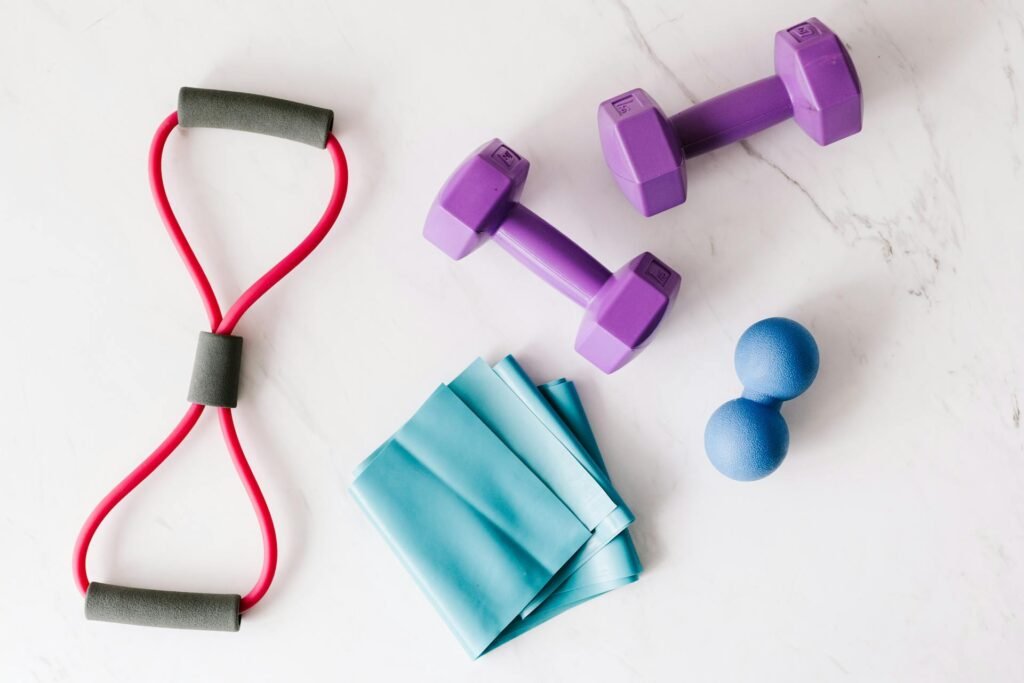
This is where most people fail. Let’s address the common hurdles and how to overcome them with a smart strategy.
Challenge #1: “I don’t have enough equipment to get strong.”
This is the most common excuse, but it’s based on a misunderstanding of how muscle is built. Your muscles don’t know the difference between a dumbbell and your own bodyweight; they only know resistance.
Solution A: Master Your Bodyweight. Calisthenics is a powerful discipline. Progressing from a basic push-up to an incline push-up, then a full push-up, and eventually a one-arm push-up provides more than enough stimulus for growth. Your body is a gym.
Solution B: The ‘Holy Trinity’ of Home Equipment. A small, one-time investment can unlock hundreds of exercises. We recommend:
Resistance Bands: Perfect for adding resistance to movements like squats and glute bridges, and essential for back exercises like rows and pull-aparts.
A Kettlebell: An incredibly versatile tool for building full-body strength, power, and endurance with exercises like swings, goblet squats, and presses.
Adjustable Dumbbells: A space-saving solution that allows you to progressively overload your exercises for years to come.
Challenge #2: “I can’t stay motivated by myself.”
The gym provides an energetic atmosphere and a sense of community. At home, it’s just you and the workout.
Solution A: Follow a Structured Program. Don’t just “do some exercises.” A professional program, like those at Liftrix, tells you exactly what to do each day. This removes the guesswork and builds momentum as you tick off each completed workout.
Solution B: Create a Ritual. Make your workout a non-negotiable appointment with yourself. Lay out your workout clothes the night before. Create an energizing playlist. Designate a specific corner of a room as your “workout zone.” These small rituals signal to your brain that it’s time to train.
Challenge #3: “How do I apply progressive overload without a full rack of weights?”
This is the most critical challenge for long-term progress at home.
Solution: You use all the other methods of progressive overload. You can increase reps, add sets, decrease rest times, improve your tempo (e.g., slowing down the negative portion of a lift), and, most importantly, progress to more challenging exercise variations. Moving from a glute bridge to a single-leg glute bridge is a massive jump in intensity without adding any weight.
Part 4: The Blueprint for a Perfect At-Home Workout Session
A balanced workout hits all your major movement patterns. Here is a simple, effective full-body template:
Warm-Up (5-10 mins): Focus on dynamic stretching. Examples: Leg Swings, Arm Circles, Cat-Cow Stretches, Bodyweight Squats.
Main Workout (20-40 mins): Perform 3-4 sets of each exercise.
1. Lower Body Compound: Goblet Squat (with kettlebell) or Bodyweight Squats (10-15 reps)
2. Upper Body Push: Push-ups or Knee Push-ups (as many reps as possible, leaving 1-2 in the tank)
3. Upper Body Pull: Resistance Band Rows (12-15 reps)
4. Hinge/Posterior Chain: Kettlebell Swings or Glute Bridges (15-20 reps)
5. Core: Plank (hold for 45-60 seconds)
Cool-Down (5 mins): Focus on static stretching, holding each stretch for 30-60 seconds to improve flexibility.
Part 5: The Next Level: Structuring Your Week at Home
To ensure you’re getting enough stimulus and recovery, structure your week with a smart “workout split.”
Option A: The Full-Body Split (3x per week).
Best for: Beginners or those with limited time.
How it works: You perform a full-body workout (like the template above) three times a week on non-consecutive days (e.g., Monday, Wednesday, Friday). This allows for ample recovery time between sessions while still hitting each muscle group frequently.
Option B: The Upper/Lower Split (4x per week).
Best for: Intermediates looking to add more volume.
How it works: You split your training into upper-body days and lower-body days. A common schedule is:
Monday: Upper Body (Push-ups, Rows, etc.)
Tuesday: Lower Body (Squats, Lunges, Glute Bridges)
Wednesday: Rest or Active Recovery (e.g., a long walk)
Thursday: Upper Body
Friday: Lower Body
Conclusion: Your Home, Your Gym, Your Rules
So, are at-home workouts effective? The science is clear: Absolutely. The effectiveness of your training is not defined by your location, but by the principles you apply.
By focusing on consistency, mastering fundamental movements, and relentlessly applying the principle of progressive overload, you can build the body of your dreams without ever leaving your home. The biggest challenge is having a smart, structured plan that removes the guesswork and keeps you progressing.
→ Ready for a proven at-home plan? Explore the Liftrix programs and start your journey today.
